The Australian Rugby League Commission’s update to the State of Origin eligibility criteria has been one of the biggest stories of the rugby league off-season.
Eliminating the Tier One nation restriction – which prevented players otherwise eligible for Queensland or New South Wales from also representing New Zealand and England – has been met with a mixed response but modernises the game and reflects its changing face.
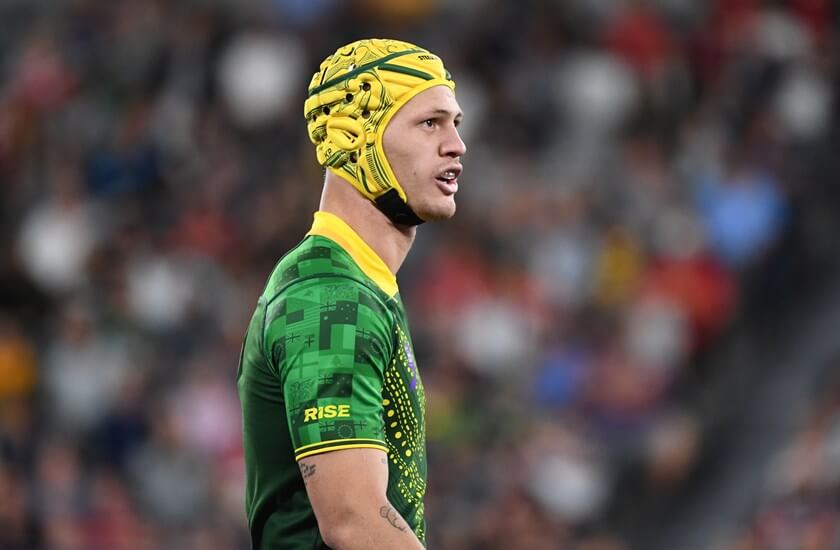
Under the new rules, Queensland star Kalyn Ponga will be free to change his international allegiance from Australia to New Zealand, while former Kiwi and current Tonga rep Addin Fonua-Blake is now a frontline 2026 NSW Origin contender, and long-serving Kiwi Briton Nikora is a big Maroons chance.
Meanwhile, Victor Radley is suddenly in the frame for a belated Blues debut and fellow England rep AJ Brimson could come back into Queensland calculations after playing Origin from 2020-23.
Steve Rogers
One of State of Origin’s earliest eligibility snafus went under the radar at the time. Rogers was born on the Gold Coast and won a Group 18 premiership with Southport Tigers in 1972 a few months before his 18th birthday .
Rogers moved to Sydney the following season, becoming a Cronulla legend and one of Australia’s greatest centres.
While the likes of Arthur Beetson and Rod Reddy relished the opportunity to don the Queensland jersey for the first time in the inaugural Origin match in 1980, Rogers played for NSW – and captained the Blues in the one-off Origin clash in 1981.
The curious situation received more airtime in the late-1990s when his son, Sharks winger Mat, pledged his allegiance to Queensland.
The junior Rogers was born in Sydney but moved to the Gold Coast with his family as a nine-year-old, playing junior footy for Nerang Roosters and representing the Maroons at age-group level. Mat played five Origins for Queensland, while Steve was later named in the NSW Team of the Century.
Craig Polla-Mounter
The absurdities of State of Origin eligibility rules during the concept’s first couple of decades was best illustrated by rugby union convert Craig Polla-Mounter being funnelled into the NSW selection pool.
Melbourne-born Polla-Mounter moved to Ipswich at a young and toured with the Australian Schoolboys rugby union team from Ipswich Grammar.
He was lured to rugby league by Canterbury-Bankstown as a 19-year-old in 1991 but was ruled a Blue for Origin purposes, because his first senior football in that code was in NSW.
While never really in the frame for the Blues, he did represent City Origin in 1993 – and would have been an outside chance of breaking into the Queensland team at some point had commonsense prevailed.
Brisbane product and Wallabies and Ireland international Brian Smith was in a similar boat, ruled eligible for NSW only despite only living in the state for the first time with he joined Balmain as a 24-year-old.
Ken Nagas
Bundaberg-bred winger/fullback Ken Nagas moved to Kyogle in northern NSW as a teenager, subsequently playing his first senior football in the region to technically qualify him for the Blues.
The Canberra flyer was selected to debut for NSW in 1994, despite admitting he had always been a Queensland supporter. Nagas’ father explained he hoped young Ken would win the man-of-the-match award … but he would still be barracking for the Maroons.
Nagas ultimately played only two Origins for the Blues, but he later admitted he regretted making himself available to play against his native state.
Adrian Lam
Rabaul-born Adrian Lam moved to Brisbane at the age of seven, playing for Wests Panthers before making his Test debut for Papua New Guinea at the end of an impressive 1994 rookie season with Eastern Suburbs Roosters.
But with Queensland’s ranks ravaged by the embargo on Super League players ahead of the 1995 Origin series, Lam was given special dispensation to play halfback for the Maroons – and starred in their 3-0 boilover success.
Lam went on to play 14 Origins (eight as captain) while concurrently representing the Kumuls in 11 Tests and captaining Rest of the World against Australia in 1997.
Craig Smith
New Zealand prop Craig Smith joined Adrian Lam in the Queensland and Rest of the World teams during 1997, with the Steelers enforcer handed an Origin debut on the basis of moving to the Sunshine State as a 16-year-old to complete his schooling.
Born in Kaitaia, suspension magnet Smith duly broken into the Kiwis line-up in 1998 and played 12 Tests for his native country.
Tonie Carroll
Born in Christchurch, Carroll moved to Queensland as a youngster and played eight Origins for the Maroons from 1998-2000.
But the hard-hitting Broncos centre/lock signed with Leeds controversially switched allegiances to play for New Zealand at the 2000 World Cup. Carroll scored a try in the Kiwis’ loss in the final to a Kangaroos side containing five of his Origin teammates from five months earlier.
But after two years in England, ‘Tunza’ returned to Brisbane and was immediately welcomed back into the Queensland fold, before making his debut for Australia in 2004. Carroll is the only player in the past 100 years to play Test football for New Zealand and Australia.
Andrew Ryan
A proud Dubbo boy who played his first graded football over the age of 16 during an eight-month stint at Emu Plains, Parramatta backrower Andrew Ryan had a compelling case to represent Country Origin and City Origin.
And so it transpired in 2002, when both camps selected him in their respective sides for the City-Country clash at Wagga Wagga. A bizarre impasse unfolded, before sanity prevailed and City relented, allowing the tyro to debut for Country.
Ryan eventually represented Country Origin six times during a wonderful career which included 11 Tests, 12 Origins and a Grand Final victory as captain with the Bulldogs.
Greg Inglis
State of Origin’s record tryscorer with 18 touchdowns in 32 appearances, Inglis ranks among Queensland’s most influential players – featuring in 10 wins from 12 series.
‘G.I.’ is also responsible for one of Origin’s most enduring eligibility controversies. Born in Kempsey on NSW’s Mid North Coast, Inglis began his rugby league journey with Bowraville Tigers and played his fist senior football for Hunter Sports High School as a 16-year-old.
Inglis did not move to Queensland for the first time until later that year, turning out for Wavell State High School and Melbourne Storm feeder club Norths Devils. He made his NRL debut at 18 in 2005 and was selected by the Maroons for his Origin debut the following season.
Nathan Fien
Cowboys half Fien represented Queensland in 2001, before joining the Warriors in 2005. The Mt Isa product pledged his allegiance to the Kiwis in 2006 – on the basis of having a New Zealand-born grandmother – and donned the black-and-white jumper during the Tri-Nations.
When it was revealed it was in fact Fien’s great-grandmother who was born in the Shaky Isles, the Kiwis lost points from their win over Great Britain and Fien was expelled from the squad.
But he eventually qualified on residency grounds and went on to play 22 Tests for New Zealand, starring in its 2008 World Cup and 2010 Four Nations final triumphs.
Israel Folau
Born in Sydney and a junior of the Minto Cobras in the city’s west, Israel Folau followed a similarly tenuous path to Queensland representation as Melbourne club-mate Greg Inglis. A couple of years in Goodna, near Ipswich, was enough to get the boom three-quarter into a Maroon jumper in 2008.
Folau’s and Inglis’ dubious eligibility claims were lumped in together by detractors south of the border, but Folau nevertheless scored seven tries in eight Origins before defecting to the AFL and later rugby union.
Rangi Chase
Castleford half Rangi Chase represented New Zealand Maori and the Super League ‘Exiles’ against England in 2010 and 2011, respectively, but was lining up alongside his former international opponents at the end of the latter season.
Born in Dannevirke in the central North Island of New Zealand, the former Wests Tigers and St George Illawarra playmaker qualified for England selection through residency after spending three seasons at Castleford.
Despite criticism of his selection by former British greats, Chase played eight Tests for England during the 2011 Four Nations and 2013 World Cup campaigns.
James Tamou
Few defections have earned the ire of New Zealanders quite like Tamou declaring himself available for NSW and Australia. Born in Palmerston North, Tamou moved to Sydney with his family as a 13-year-old and came through the ranks at the Roosters.
The New Zealand Māori rep made his NRL debut with the Cowboys in 2009 and was named in the Kiwis’ train-on squad for the 2011 Four Nations. But after urging from Ricky Stuart and Paul Gallen, Tamou changed his allegiance and broke into the Kangaroos and Blues line-ups in 2012.
Tamou’s defection prompted the long-standing rule requiring a player to have resided in Queensland or NSW before their 13th birthday to be eligible for Origin. The towering prop played 12 Tests and 14 Origins before falling out of representative favour in late-2016.
Josh Papalii
Auckland-born Papalii moved to Australia as a five-year-old and played his junior football for Logan Brothers. He represented the Junior Kiwis at the end of his 2011 NRL rookie season with Canberra, but Mal Meninga convinced the powerhouse forward to change allegiances to Queensland and Australia.
Papalii starred in the Maroons’ series victory and the Kangaroos’ World Cup triumph in 2013, becoming a staple of both packs. He played for Toa Samoa at the 2017 World Cup after being left out of Meninga’s Kangaroos squad but played the last of his 11 Tests for Australia in 2019.
The 329-game Raiders veteran, who would have been eligible to play for New Zealand and Queensland under the new rules, made a triumphant return to the Maroons’ fold for the 2025 decider – his 24th Origin appearance.
Semi Radradra
Scouted by Parramatta while playing for the Fiji rugby sevens team, Radradra moved to Australia in 2012 to cut his teeth with the Eels’ under-20s. Radradra played for Fiji at the 2013 World Cup four months after making his NRL debut, before claiming Dally M Winger of the Year honours in 2014-15.
The prolific try-scorer announced his availability for Australia in early-2016, qualifying on residency grounds despite State of Origin eligibility criteria ruling him out of NSW contention.
Radradra’s Anzac Test selection for the Kangaroos was widely criticised. But he was ruled out of the 2016 Four Nations campaign due to off-field incidents, while he left Parramatta to play rugby union in France at the end of 2017.
Jason Taumalolo
Taumalolo, an Australian Schoolboys and Junior Kiwis rep, was the subject of a representative tug-of-war between Queensland and New Zealand as an 18-year-old in 2012, before making a switch that kick-started an international rugby league mini-revolution.
The Auckland-born Cowboys wrecking ball turned out for Tonga (where his parents were born) at the 2013 World Cup but debuted for New Zealand during the following year’s Four Nations and played 10 matches for the Kiwis up to the 2017 Anzac Test.
Taumalolo stunned the rugby league world five months later, turning his back on the Kiwis to play for Mate Ma’a Tonga.
The controversial 11th-hour announcement helped convince Fifita and fellow New Zealand reps David Fusitu’a, Sio Siua Taukeiaho and Manu Ma’u to follow suit, leading to Tonga’s history-making defeat of the Kiwis at the tournament as the island nation surged to the RLWC semis.
Andrew Fifita
Dynamic front-rower Fifita represented Tonga as a West Tigers rookie in 2010. The Blacktown-born powerhouse debuted for NSW and Australia during a breakout 2013 campaign for Cronulla.
A Blues staple, Fifita ended a four-year Kangaroos hiatus in the 2017 Anzac Test, having been ruled ineligible for the previous season’s Four Nations for off-field reasons.
But after being named in Australia’s 2017 World Cup squad, Fifita defected to Tonga the day after Jason Taumalolo’s decision to shun New Zealand and play for the island nation.
Fifita was an inspiration during Mate Ma’a Tonga’s watershed RLWC charge and declined to return to the Blues and Kangaroos fold in 2018.
Luke Keary
Keary dreamed of following in the footsteps of fellow Ipswich-born half Allan Langer into the Queensland team.
After playing junior football for Ipswich Brothers, he moved to Sydney with his family as a 10-year-old but returned to Queensland while still a teenager, turning out for Burleigh Bears.
Keary’s Origin eligibility became a focal point soon after debuting for Souths in 2013, with the recently introduced laws ruling him a New South Welshman.
Breaking into the Australian team in 2018 after winning the Clive Churchill Medal in the Roosters’ grand final triumph, Keary accepted his Origin fate but ultimately played only game for the Blues – a loss in the 2020 series opener.
Ronaldo Mulitalo
Auckland-born Mulitalo moved to Ipswich as a 13-year-old in 2013, coming through the grades with the Jets before signing with Cronulla in 2017 and representing Queensland under-18s that year.
The flamboyant winger was named as would-be debutant Reece Walsh’s replacement in the Queensland side for the second game of the 2021 series after he was ruled out by injury.
Embarrassingly for the Maroons, Mulitalo was found to be ineligible – missing the residency age requirements by about 11 months.
To the chagrin of the Kiwis’ stauncher supporters, the prolific Sharks flyer was selected by New Zealand in 2022 and has scored seven tries in nine Tests in the black-and-white jersey.