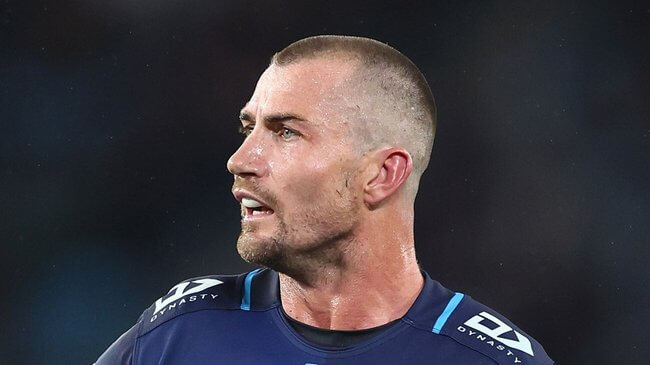
Kieran Foran was the big story of Round 5, guiding embattled Manly to a stunning 52-18 victory over the Dolphins in his first match as interim coach – less than seven months after his final NRL appearance as a player.
Whether the Sea Eagles role is temporary or not, ‘Foz’ has already been earmarked as a head coach-in-waiting. Here, we take a look at players who have made the quickest transition from hanging up the boots to picking up the clipboard at the elite level.
The list overlooks players who finished their playing days as captain-coach, such as Clive Churchill, Ken Kearney, Bob Fulton and Wally Lewis.
John O’Neill
‘Lurch’ was one of the last remnants of South Sydney’s 1967-72 golden era still at the club when it sunk to a wooden spoon finish in 1975. The former Test prop called time on his playing career the following season but stepped straight into the coaching hot-seat with the Rabbitohs.
Souths won just three games in 1977 under O’Neill, who handed the coaching reins over to Jack Gibson and did not coach again at first-grade level.
John Peard
A two-time premiership-winner with Eastern Suburbs and two-time grand finalist at Parramatta, ‘Bomber’ Peard’s 14-season career wrapped up with the Eels in 1979.
Peard immediately took over from former mentor Terry Fearnley as Parramatta coach in 1980, but that resulted in the club missing the finals for the first time in six years and he was replaced by Jack Gibson, his coach at Easts.
The ex-Australian five-eighth had a modest two-season stint in charge at Penrith and later coached the NSW Origin team to a historic 3-0 loss in 1988.
Greg Pierce
Cronulla’s first Test representative, back-rower Pierce made a then-record 210 appearances for the Sharks from 1969 until his retirement in 1980.
The club’s disastrous campaign under Tommy Bishop in the latter year prompted the Cronulla hierarchy to install the 30-year-old Pierce as head coach in 1981. He steered the Sharks to the finals at his first attempt but a mid-table finish in 1982 saw the job go to veteran coach Terry Fearnley.
Tim Sheens
Ball-playing prop Sheens was a stalwart of the battling Penrith club, playing a then-record 177 top-grade games from 1970-82.
After captaining Campbelltown to a Group 6 premiership in 1983, Sheens returned to the Panthers as head coach in 1984. The 33-year-old was named Coach of the Year after leading the Panthers to within an ace of a maiden finals appearance – a breakthrough he achieved the following season.
Sheens went on to coach Canberra to three grand final wins and Wests Tigers to an extraordinary NRL premiership triumph, ultimately coaching in almost 700 first-grade games.
Phil Gould
Earmarked as a rare coaching talent while still a player, Gould finished his career with Souths in 1986 after a decade with Penrith, Newtown and Canterbury.
‘Gus’ spent a year as the Bulldogs’ reserve grade coach then succeeded Warren Ryan in the top job in 1988. The 30-year-old became just the second coach to win a premiership in his first year and the youngest ever to do so as a non-playing coach.
Gould won another title at Penrith in 1991, had a high-profile stint with the Roosters and became NSW’s most successful Origin coach.
Craig Young
The standout prop of his era, Young led St George to a premiership in 1979 and another grand final in 1985, retiring in 1988 with 234 games in the Red V to his credit.
‘Albert’ went straight into the head coaching furnace – an ill-advised move at a high-profile club that had struggled for several seasons and had recruited modestly.
The Dragons regressed further under the inexperienced Young, winning just 18 of 44 games in 1989-90. Brian Smith took over in 1991 and took them to a grand final a year later.
Mark Murray
Queensland’s undisputed top halfback from 1981-86 who played seven Tests for Australia, Murray’s career was abruptly cut short by an eye injury leading into the 1987 season.
‘Muppet’ took over as coach at his old club Redcliffe in 1988, while he was still only 31 years old when he was handed the top job at struggling Eastern Suburbs in Sydney in 1991.
After an encouraging climb in 1991-92, the Roosters stalled and Murray made way for Phil Gould’s arrival in 1995. He later had unsuccessful stints as Queensland Origin coach and in two seasons in charge of Melbourne Storm.
Wayne Pearce
A Balmain legend and long-serving captain, Pearce retired in 1990 and settled into a cushy media gig for a few years before heeding the Tigers’ call for a coach.
‘Junior’ picked up the pieces from the disastrous Alan Jones era but collected a wooden spoon in his 1994 rookie season.
Despite failing to return the club to the finals, Pearce remained Balmain’s coach until the merger with Western Suburbs at the end of 1999 and beat Tom Raudonikis for the job as Wests Tigers’ foundation coach. He also succeeded Raudonikis as NSW coach, guiding the Blues from 1999-2001.
Royce Simmons
Penrith legend and former Test hooker Simmons enjoyed one of the great premiership farewells, scoring two tries in the Panthers’ maiden grand final triumph in 1991.
Less than three years later, Simmons succeeded his former coach Phil Gould, taking on the Panthers’ interim coaching duties in late-1994 before slotting into the fulltime role – which he held onto until 2001.
Bob Lindner
Queensland great and former Brisbane Souths, Parramatta, Gold Coast and Wests back-rower Lindner finished his career with a season at Illawarra in 1993.
Eighteen months later – and after a captain-coach stint at Oldham – the 24-Test veteran became the South Queensland Crushers’ 1995 foundation coach at just 32 years of age, having originally been slated as a high-profile playing recruit.
After enjoying just nine wins in 44 games, Lindner left the Crushers at the end of 1996 and returned to Oldham in an interim capacity midway through 1997.
Andrew Farrar
Hard-as-nails Test centre Andrew Farrar won three premierships with Canterbury and finished his career in 1994 after stints with Wests, Wigan and Illawarra.
The Crushers’ inaugural reserve grade coach in 1995, Farrar returned to the Steelers and took over as head coach in 1997. He was David Waite’s St George Illawarra assistant in 1999 and took over the head coach role during 2000, remaining at the helm until the end of 2002.
Mal Meninga
Meninga’s record-shattering career – encompassing 17 seasons of first grade in Brisbane and Canberra, 32 Origins and 46 Tests – concluded in 1994 with a third grand final win as Raiders captain and an unprecedented fourth Kangaroo Tour.
Meninga was touted early on as a candidate to be the Crushers’ foundation coach, but he ultimately waited a couple of years and succeeded Tim Sheens as Raiders coach in 1997.
While his five-season stint in charge of the Green Machine was not regarded as successful, he won 52.8 percent of his matches. But he found greater success in the rep arena, guiding Queensland’s incredible dynasty before coaching Australia from 2016-24.
Meninga will be Perth Bears’ first coach in 2027 – a whopping 26 years after his last NRL coaching appointment.
Ricky Stuart
Canberra legend Stuart finished a decorated career with Canterbury in 2000 and wasted little time cutting a path to NRL head coach status.
After taking the Bulldogs’ Jersey Flegg team to a grand final in 2001, he was installed as Sydney Roosters’ first-grade coach when Graham Murray was controversially axed. It proved an astute appointment, however, as ‘Sticky’ guided the Roosters to the 2002 title and grand finals in 2003-04.
Stuart had stints with Cronulla and Parramatta before returning to the Raiders in 2014. He is in his 13th straight season as Canberra’s coach, a tenure that garnered a grand final appearance in 2019 and a minor premiership in 2025.
Nathan Brown
A neck injury forced gifted Dragons hooker Nathan Brown into early retirement during the 2001 pre-season.
Brown slotted straight into coaching with the Saints’ Jersey Flegg team in 2002 before taking over from Andrew Farrar as the club’s NRL coach the following season, aged just 29.
It was a rocky start during a disappointing 2003, including an infamous incident where he berated several of his players on the sideline in a match and slapped linchpin Trent Barrett.
Failing to get the best out of a stacked Dragons roster in six seasons, Brown had successful terms with Huddersfield and St Helens won less than a third of his games in subsequent NRL stints with Newcastle and the Warriors.
Ivan Cleary
Retiring at 31 following the Warriors’ 2002 grand final loss, sharpshooting fullback/centre Cleary returned to the Roosters to cut his teeth coaching as an assistant and in the lower grades.
Cleary went back to Auckland as a Warriors assistant coach in 2005 and was elevated to the head coach position at Tony Kemp’s expense the following season. He guided the Warriors to the 2011 grand final before joining Penrith, where he won four straight titles (2021-24) during his second tenure at the club.
Brad Fittler
A teenaged premiership winner with Penrith and youthful rep captain in the mid-1990s, ‘Freddy’ hung up the boots after skippering the Roosters to three straight grand finals from 2002-04.
Fittler was thrust into the NRL interim head coaching caper less than three years later when the Roosters parted ways with Chris Anderson mid-2007.
A spirited late-season revival saw the Roosters give the 35-year-old the fulltime gig, after which he led the club to a top-four finish in 2008 and a disastrous wooden spoon in 2009 – his last season coaching in the NRL. Fittler later coached NSW from 2018-23, winning three series.
Benji Marshall
Wests Tigers icon Marshall’s extraordinary 19-season NRL career finished with South Sydney’s grand final loss in 2021.
The Kiwi was brought onto returning Tigers coach Tim Sheens’ staff in 2023 with a view to groom him for the head coach role over two seasons. But another wooden spoon saw the club fast-track that plan, with Benji catapulted into the hot-seat in 2024.
After another last-place finish at this first attempt, Marshall has overseen the Tigers’ steady improvement over the past season and a bit.