The 2026 NRL season has provided trials and tribulations for each of last season’s top-four finishers.
Defending premiers Brisbane Broncos sit second-last after losing their last eight games and are almost certain to be the first reigning champs to miss the finals for non-salary cap breach reasons in 21 years.
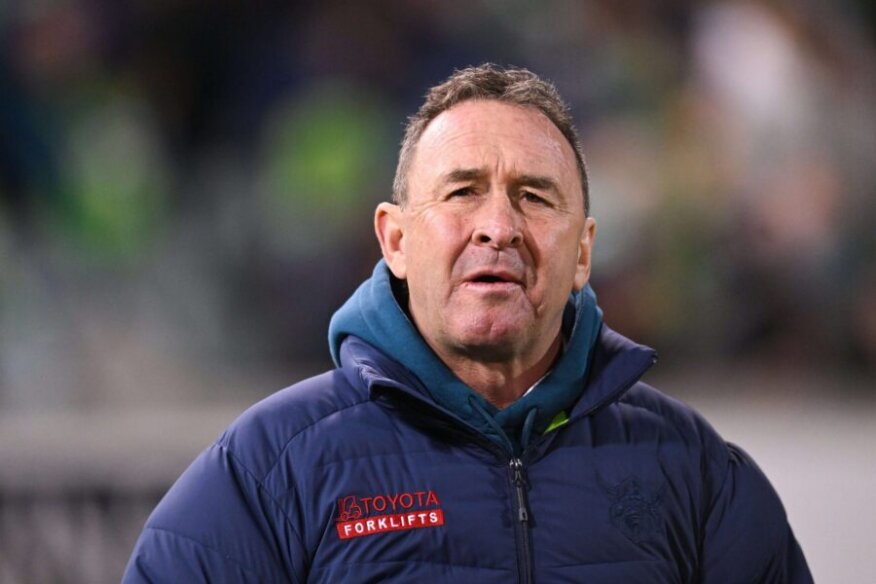
Meanwhile, Canberra Raiders are only one win better off and need a minor miracle to avoid becoming the first minor premiers to fail to make the Top 8 the following season since the 2016 Sydney Roosters.
Melbourne Storm’s record seven-game losing streak has put them in danger of missing the playoffs for only the second time in Craig Bellamy’s 24 seasons (after their salary cap penalty-imposed absence in 2010) and Canterbury Bulldogs also have more losses than wins with a third of the season left.
If none of the quartet rally to grab a Top 8 spot, it will be the first time in 14 years that four of the previous year’s finalists have missed out.
We’ve gone through the archives to reveal the biggest instances of year-to-year post-season churn.
1981
Eastern Suburbs took out back-to-back minor premierships in 1980-81 under Bob Fulton, but the make-up of the five-team finals series in the latter season was a relative crapshoot.
Defending premier Canterbury-Bankstown won just eight games to finish 10th in the 12-team competition, St George and Souths finished just a point ahead of the Bulldogs after making the 1980 finals, and Western Suburbs dropped from third to sixth.
Newtown was the big success story – the Jets ended an eight-year finals drought to land second and reach what would be the club’s last grand final, where Parramatta, sixth in 1980, took out its long-awaited maiden premiership.
Cronulla and Manly finished fourth and fifth, respectively, after missing the boat the previous season.
1983
Parramatta and Manly took out the top two spots and contested the grand final in 1982 and ’83, but the heavyweights were accompanied by three news faces in the playoffs.
Canterbury moved up from ninth to finish third, Balmain earned fourth spot just two seasons after collecting a wooden spoon then coming 11th in 1982, and St George climbed from 10th to win a fifth-place playoff against 1980-82 finalists Easts.
Norths couldn’t back up their 1982 finals appearance – the club’s first in 19 years – finishing seventh in 1983, while Wests’ memorable ‘Fibros’ era came to a grinding halt as they plummeted to last place and were temporarily punted from the competition.
1992
There was a major reshuffle in the pecking order of premiership clubs during 1992. Western Suburbs was the only club to qualify for the five-team final series in both 1991 and ’92, finishing fifth in each season.
Brisbane took out the 1992 minor premiership after finishing seventh the previous season, while St George improved from ninth in 1991 to second a year later – the Dragons’ first finals appearance in seven years.
Illawarra and Newcastle qualified for maiden finals series in 1992 after eighth- and 13th-place finishes, respectively, in 1991. In contrast, 1990-91 grand final opponents Penrith (ninth) and Canberra (12th), and ’91 top-three finishers Norths (11th) and Manly (eighth) missed the boat 12 months later.
1993
While the Broncos and Dragons eventually won through to the grand final for the second straight year, there was plenty of churn elsewhere in the upper reaches of the premiership ladder in 1993.
The Raiders and Sea Eagles returned to more familiar top-five terrain, while Canterbury stormed to the minor premiership after missing the playoffs in the previous four seasons.
The Steelers (seventh) and Knights (ninth) proved flashes in the pan after their 1992 breakthroughs, while the Magpies plummeted to 13th as the Warren Ryan era unravelled.
2005
The remarkable 2005 season represented the biggest change of the natural order in over a decade. Defending premiers the Bulldogs finished a dismal 12th, while 2002-04 grand finalists Sydney Roosters faded to end up in ninth – the first time in a decade the club had missed the finals.
Penrith, premiers in 2003 and preliminary finalists in 2004, won just six of their first 19 games and finished 10th, while Canberra dropped to second-last.
On the flipside, first-time finalists Wests Tigers took out the premiership from fourth spot, minor premier Parramatta and Cronulla reached the finals after two-year absences, and Manly made its first post-season appearance since 1998.
2008
Though Melbourne and Manly took out the top two spots in 2008 and would go on to feature in the grand final for the second straight year, there was rapid turnover elsewhere.
Eleventh in 2007, Cronulla was edged out for the minor premiership only on for-and-against in a big turnaround under Ricky Stuart, whose former club, Sydney Roosters, put three years in the doldrums behind them to finish fourth.
Canberra and St George Illawarra landed sixth and seventh, respectively with 13-11 records – after both had finished in the bottom four in 2007 with only nine wins apiece.
The Bulldogs went from sixth to a wooden spoon, while North Queensland (third to 15th), Souths (seventh to 14th) and Parramatta (fifth to 11th) were the other big sliders.
2009
The Sharks and Roosters endured an abhorrent 2009 decline on the field that was matched only by the clubs’ respective atrocities off it. They won just five games apiece – the Roosters took the spoon on for-and-against – and were perpetually in the news for all the wrong reasons.
Meanwhile, the Raiders tumbled from sixth to 13th, and the Warriors, rocked by the tragic off-season drowning death of Sonny Fai, went from a 2008 preliminary final appearance to a 14th-place finish.
The Bulldogs recovered from a wooden spoon in 2008 to go within a whisker of the minor premiership, while the Titans qualified for a maiden finals appearance in third after coming 13th the previous season, and the Eels and Knights returned to the playoffs.
2010
Premier Melbourne was consigned to the 2010 wooden spoon by the salary cap breach penalties doled out by the NRL.
Meanwhile, 2009 grand finalist Parramatta spiralled to a 12th-place finish and the Bulldogs – second a year earlier – landed 13th in 2010. Perhaps most remarkably, Brisbane missed the finals for the first time in 19 years.
Respective coaches Daniel Anderson, Kevin Moore and Ivan Henjak all lost their jobs.
Capitalising on those falls, Sydney Roosters created history by reaching the grand final 12 monhts after finishing with the wooden spoon.
Penrith qualified for the finals for the first time in six years in second, Wests Tigers came third in the club’s first Top 8 appearance since winning the 2005 appearance, the Warriors rose to fifth after coming 14th in 2009 and Canberra improved from 13th to seventh.
The five-team churn is an all-time record.
2011
Eventual grand finalists Manly and the Warriors, Wests Tigers and defending champion St George Illawarra were the only 2010 finalists to make the Top 8 again in 2011.
After back-to-back top-four finishes, Gold Coast landed the wooden spoon, while Penrith tumbled from second to 12th, the Roosters backed up their grand final run with an 11th-place finish and the Raiders spiralled to second-last.
The Storm returned from their salary cap purgatory to win the minor premiership before being rolled in the preliminary final by the Warriors. The Broncos and Knights were also back after a one-year hiatus, while the Cowboys reached the finals for the first time since 2007.
2012
The last season to witness a four-team Top 8 turnover, 2012 saw the Warriors go from a grand final to 14th, Wests Tigers follow up consecutive top-four finishes by landing 10th, the Saints feel the post-Bennett pinch to come ninth, and the Knights drop to 12th despite Bennett’s arrival.
Canterbury powered to its first minor premiership in 19 years as Des Hasler’s arrival garnered immediate results, while Souths came third – only the second time they had reached the finals since 1989 – in Michael Maguire’s first season as an NRL coach.
Canberra improved from 15th to sixth and Cronulla rose from 13th to seventh to qualifying for the playoffs for the first time since 2008.